Welcome to the Observatory's Front Page. Included here are some of the latest news and articles that may be of interest to our visitors.
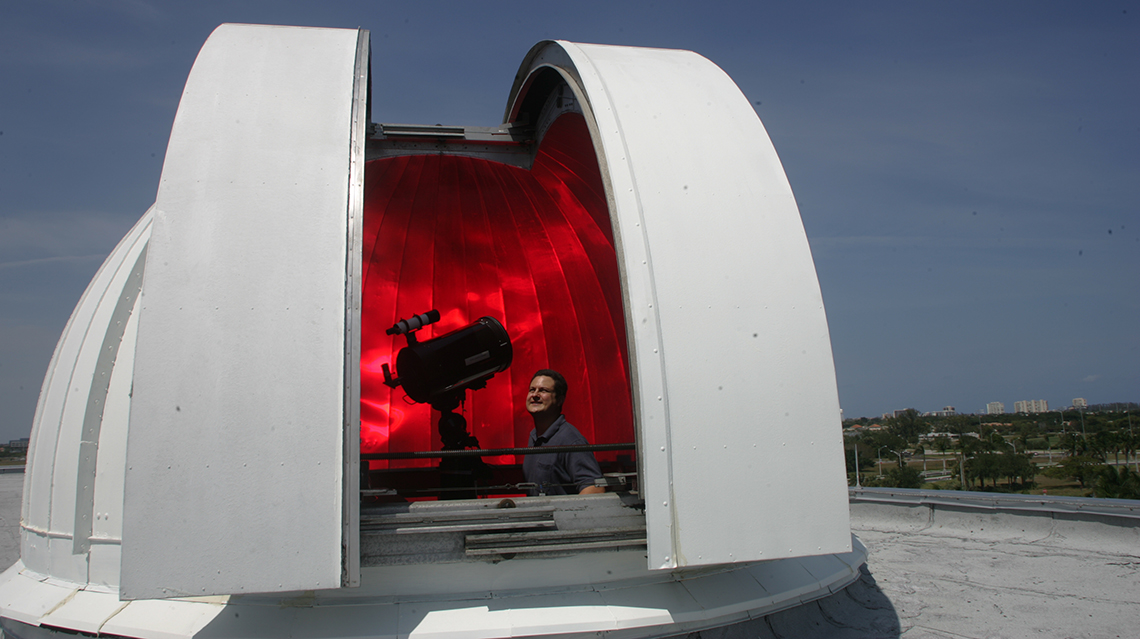
FAU's Astronomical Observatory is housed under a four meter diameter dome on the Boca Raton campus of Florida Atlantic University. We welcome students, faculty, staff and members of the general public to join our scheduled observations or our public viewing events. Our telescope is mounted on a small platform, at the top of stairs, looking out of the roof of our building, over Boca Raton, to space and beyond!
Section updated: September 28 th, 2026.
The month of October 2026 will be filled with astronomical and Observatory events.
Friday’s October 2nd: 🦉 FAU Owl Family Weekend
We will be a part of FAU’s Owl Family Weekend for families and students to spend time together and enjoy what FAU has to offer. Details at: https://www.fau.edu/newstudent/family/weekend/.
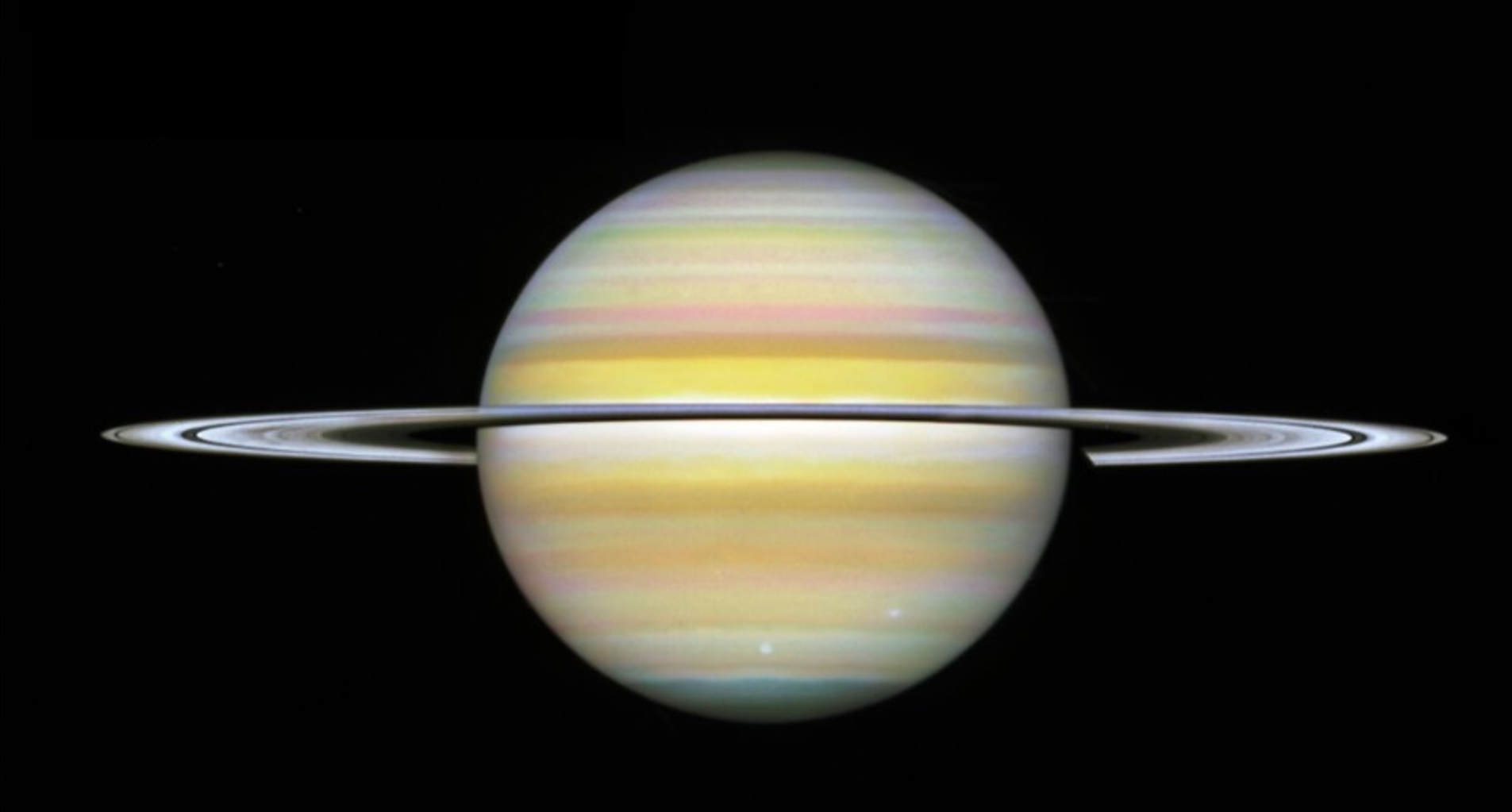
Sunday October 4th : ♄ ☉☍ Saturn's Solar Opposition
The Earth reaches a perfect opposition syzygy alignment between Saturn and the Sun at 8:04 am. It'll be 8.434 au away or almost exactly 70 light minutes away from us then. The Observatory will focus on this "Planet of Geometry" on Friday, October 9th.
Tuesday, October 6th : 🌘 ♃☌ Moon Jupiter Occultation
You may want to get up pre-dawn at 4:20 am until 5:11 am and look due east to witness the waning crescent Moon occult or pass in front of the planet Jupiter. Each time, the Moon will take nearly 80 seconds to complete each part.
Thursday, October 8th: 🌠 Draconids Meteor Shower
Coming from a radiant next to the head of the northern constellation Draco the dragon, the Earth scoops up particles from the comet 21P Giacobini-Zinner. The numbers of its meteors are variable, ranging from 0 to storm. The meteors are somewhat bright but very slow, traveling only 20 km/s. Lunar conditions are ideal for viewing them.
As the meteors will appear to travel all across the entire sky, you'll want a dark, clear and unobstructed view of it that you can find. So go far away from city lights to see them. In South Florida, I often advise folks to try the beach, though please be VERY careful during sea turtle season! Use only red LED flashlights as the color also protects your night vision (and of course your night time circadian rhythm, too) so that you can see the show. Bring a blanket, use bug spray, get comfortable and enjoy the view!
|
August 29th, 2025 |
Friday, October 9th : 🔭🪐 Public Viewing Session We will feature the “Planet of Geometry” (a.k.a. Saturn) for the evening of our public viewing session and discuss why it should be called as such. You can find it right below the green line for the ecliptic, between the constellations of Aquarius, Cetus and Pisces, is where we will find the planets Neptune and the “Planet of Geometry”. |